Relationships can bring a lot of joy, but they can also bring uncertainty. You may find yourself asking:
“Do I really love my partner enough?”
“Are we actually compatible?”
“Why do I keep questioning our relationship?”
“Is this a normal relationship problem, or is something seriously wrong?”
First, Remember: Healthy Relationships Aren’t Perfect
A healthy relationship doesn’t mean you never disagree, feel irritated, need space or question something. Two people can love each other and still have different personalities, expectations, communication styles and needs. Conflict and misunderstandings are normal parts of close relationships. A more useful question is:
“What happens when something goes wrong between us?”
Can you talk about it?
Can you disagree while maintaining respect?
Can both people listen and take responsibility?
Can you repair after an argument?
Is there a willingness to make things better?
These patterns often tell you more about relationship health than whether you experience occasional doubts.
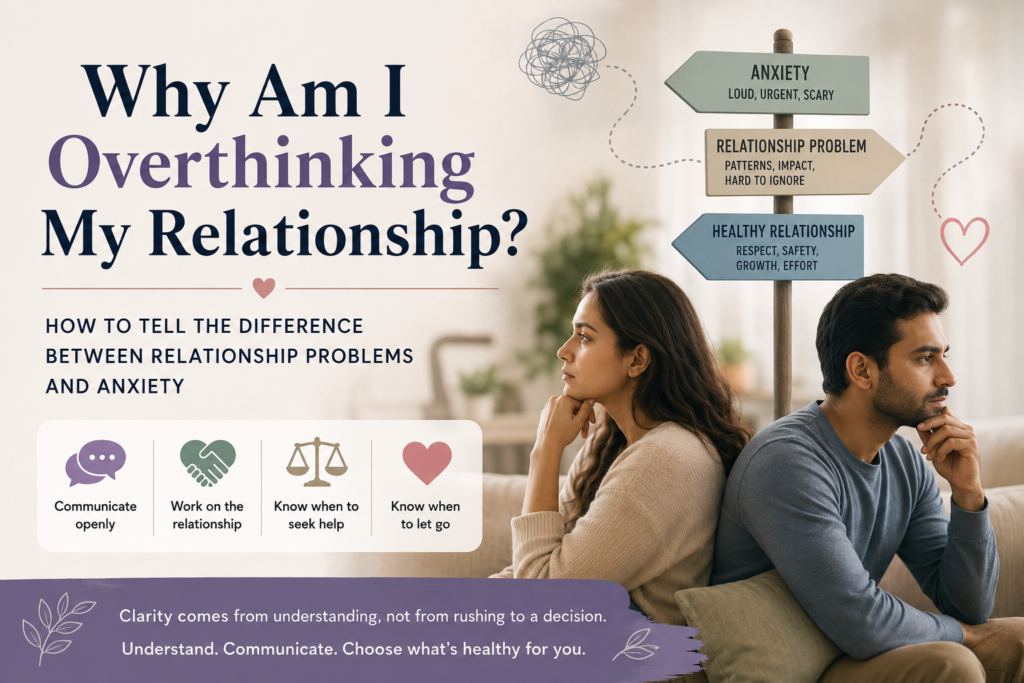
When Is It Anxiety or Overthinking, and When Is It a Relationship Problem?
There isn’t a perfect test that can separate anxiety or overthinking from a genuine relationship concern. However, it can help to distinguish between what happened and what your mind concluded about it.
For example:
What happened:
“My partner didn’t reply for several hours.”
What your mind concluded:
“They don’t care about me anymore.”
The conclusion may turn out to be accurate, but it isn’t the only possible explanation.
Similarly:
What happened:
“We had an argument.”
What your mind concluded:
“Healthy couples don’t fight. Maybe we’re incompatible.”
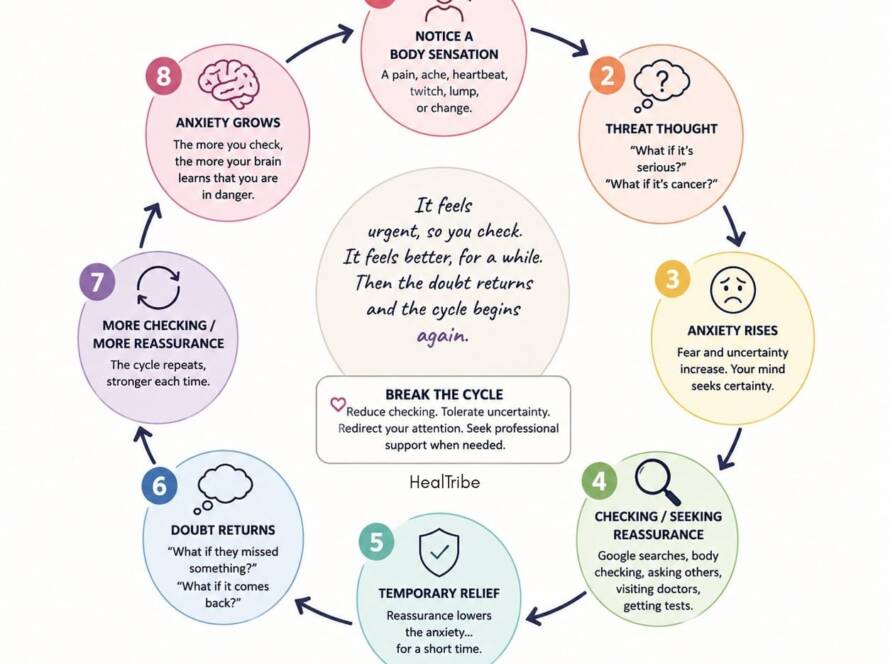
You may then find yourself repeatedly analysing conversations, checking your feelings, comparing your relationship with others or asking people for reassurance. The problem is that relationships rarely provide complete certainty. Instead of asking, “Can I be 100% certain this is the right relationship?”, try asking: “What does the overall pattern of this relationship look like?”
Signs of a Relationship Worth Working On
There is no single definition of a perfect relationship, but some foundations are important.
1. You can communicate
You should be able to express your feelings and needs without constantly feeling afraid of the consequences. This doesn’t mean every conversation will go perfectly. Healthy communication is often about being able to return to difficult conversations and understand each other’s perspective.
Instead of:
“You never care about me.”
you might try:
“I felt hurt when that happened. Can we talk about it?”
2. You can disagree respectfully
Conflict isn’t automatically a sign of incompatibility. The important question is how conflict is handled. Couples can disagree while still listening, maintaining respect and avoiding humiliation, threats or personal attacks. Sometimes taking a break when emotions are high and returning to the conversation later can be more productive than trying to resolve everything immediately.
3. Both people’s needs matter
A relationship involves compromise, but compromise should not mean that one person constantly gives up their boundaries, friendships, interests or wellbeing. Your partner’s needs matter. Your needs matter too. A healthy relationship also allows both people to maintain their individuality.
4. There is room for repair
Everyone makes mistakes. Someone may become defensive, say something insensitive or handle a situation poorly. What matters is whether there is an ability to repair afterwards. Repair can involve acknowledging what happened, apologising, listening, taking responsibility and trying something different next time.
A repeated problem isn’t necessarily a reason to end a relationship—but repeated problems with no willingness to acknowledge or work on them deserve attention.
What If Nobody Is Doing Anything “Wrong”?
Sometimes there is no villain. Two people can genuinely care about each other and still discover that their values, goals, needs or ways of living are not compatible enough. You don’t need to prove that your partner is a bad person to decide that a relationship isn’t right for you. Similarly, your partner doesn’t need to be a bad person for you to recognise that something isn’t working.
Consider whether:
- important needs remain consistently unmet despite honest attempts to address them
- fundamental values or life goals are incompatible
- there is little willingness to work on recurring problems
- respect has significantly deteriorated
- you repeatedly feel that you have to abandon important parts of yourself
- the relationship continues to significantly affect your wellbeing despite genuine attempts to improve it
The question doesn’t always have to be:
“Who is wrong?”
Sometimes the better question is:
“Can the two of us realistically build the kind of relationship that both of us need?”
When Is It Time to Consider Leaving?
Working on a relationship doesn’t mean staying regardless of what happens. There is a difference between ordinary relationship difficulties and patterns of abuse, coercion or serious harm. It is important to take seriously situations involving:
- physical violence
- threats or intimidation
- forced sexual activity
- controlling or monitoring behaviour
- isolation from friends or family
- financial control
- repeated humiliation or degradation
- behaviour that makes you afraid
- coercive control
These aren’t simply communication problems that you are expected to solve through better communication. If you are experiencing abuse or fear for your safety, prioritise your safety and seek appropriate professional or local support.
Relationships Are Built, Not Perfectly Found
There is no relationship that comes with a guarantee of permanent certainty. Relationships require communication, compromise, patience and ongoing effort from both people. Sometimes anxiety can make you question something that is fundamentally workable. Sometimes genuine relationship concerns need to be addressed. And sometimes, despite sincere effort, two people may realise that the relationship is no longer right for them.
The goal isn’t simply to stay together. The goal is to build a relationship in which both people can feel respected, heard, safe and able to remain themselves.
If you find yourself repeatedly questioning your relationship, a mental-health professional can help you step back from the immediate emotion, understand the patterns involved and make decisions from a more grounded place.
This article is for general educational purposes and is not a substitute for individual psychological assessment or therapy.